Surfing the Web, I stumbled upon our Army's collection of scholarly articles at www.army.mil/professionalwriting/. One article was entitled "Breaking the Tether of Fuel." Its first sentences required me to read them twice before I pieced together their (rather simple) meaning. Whatever happened to clear and frequent active verbs? Whatever happened to putting the old information in the sentence's beginning?
Here is what I read:
During the advance on Baghdad, senior Marine and Army field commanders had many significant interdependent variables to contemplate in addition to the capability and intent of the Iraqi forces before them. In order to maintain both the velocity and operational tempo of their highly mobile forces located across a wide battlespace, the subject of fuel was an ever-present consideration. Much time, energy, and continuous analysis was put into determining when, or if, a culminating point would be reached due to this vital resource. (Flesch Reading Ease 18.7, grade level 12.0)
Here is what some military pundit could have written:
While US field commanders advanced on Baghdad, they worried not only about what Iraqi forces could do and intended. They had to move their highly mobile forces across a wide battlespace; so they worried constantly about fuel. They continuously analyzed supply and use variables to learn when their fuel would run out.
In my opinion, the longer a general must spend decoding flowery language, the less time she has to think strategically, learn about her people, and achieve every soldier's dream: unemployment. (My writing in this post has a Flesch Reading Ease of 49.4 and a grade level of 9.9.)
Wednesday, April 25, 2007


Thursday, April 05, 2007
Dyslexia
You know the first-grader who doesn't seem to understand phonics? The fifth grader who avoids reading and whose handwriting looks like insect tracks? The adult who says, "I brought the things over there, and I saw how they had the stuff so that's where I told him to put it"?
Any of these people might be dyslexic. I've been reading about dyslexia for years, and working with two dyslexic children about whom I care deeply. I've benefited from talks with a brilliant scientist friend who himself has an unusual cognitive style. Here's what I've found.
The best book on dyslexia is probably Overcoming Dyslexia (2003) by Sally Shaywitz, MD. The subtitle is "a new and complete science-based program for reading problems at any level."
Shaywitz's book builds, I think, on the linguistic science in Why Our Children Can't Read And What We Can Do About It (1997) by Diane McGuinness, Ph.D. McGuinness constructs an elaborate foundation of detailed linguistic analysis of English, which leads up to a section of "practical solutions." These solutions are consistent with the later ones that Shaywitz presents. The solutions are ways of teaching reading that concentrate on linking sounds with the wide variety of letters or syllables that represent them. This linking process is what daunts people with dyslexia.
Shaywitz emphasizes the other mental strengths that surround the dyslexic person's phonemic weakness. This emphasis on developing compensatory cognitive strengths is broadened in another good book, The Myth of Laziness by Mel Levine, MD.
In short, for the poor reader (at any age), there is now understanding--and help.
Any of these people might be dyslexic. I've been reading about dyslexia for years, and working with two dyslexic children about whom I care deeply. I've benefited from talks with a brilliant scientist friend who himself has an unusual cognitive style. Here's what I've found.
The best book on dyslexia is probably Overcoming Dyslexia (2003) by Sally Shaywitz, MD. The subtitle is "a new and complete science-based program for reading problems at any level."
Shaywitz's book builds, I think, on the linguistic science in Why Our Children Can't Read And What We Can Do About It (1997) by Diane McGuinness, Ph.D. McGuinness constructs an elaborate foundation of detailed linguistic analysis of English, which leads up to a section of "practical solutions." These solutions are consistent with the later ones that Shaywitz presents. The solutions are ways of teaching reading that concentrate on linking sounds with the wide variety of letters or syllables that represent them. This linking process is what daunts people with dyslexia.
Shaywitz emphasizes the other mental strengths that surround the dyslexic person's phonemic weakness. This emphasis on developing compensatory cognitive strengths is broadened in another good book, The Myth of Laziness by Mel Levine, MD.
In short, for the poor reader (at any age), there is now understanding--and help.
Wednesday, March 28, 2007
Noodlebib to Create Bibliography
Noodlebib (at Noodletools.com) is a good choice of software for someone who must write term papers for elementary school, high school, or even college.
Months ago, I told you I'd subscribed to Noodlebib, software for creating bibliographies in APA or MLA style. My sister the librarian had to show me how to use it, but once she did, I became a fan.
Noodlebib, available at noodletools.com, is easy to use (I *could* have figured it out myself). After you select APA or MLA and the kind of source you want to record (book, article, etc.), Noodlebib offers and explains meaningful alternatives. It opens a questionnaire that solicits all the information that it will need. Before you close the questionnaire, it even checks for errors. Noodlebib is filled with help features that are easy to access.
I paid $6 per year to have the notecard feature. (Without that feature, Noodlebib is free.) I wasn't able to use notecards in my Safari (Mac) browser, but when I queried Noodletools, they responded promptly that I just needed to upload Firefox, which I did. So the support for Noodletools wins my praise.
Months ago, I told you I'd subscribed to Noodlebib, software for creating bibliographies in APA or MLA style. My sister the librarian had to show me how to use it, but once she did, I became a fan.
Noodlebib, available at noodletools.com, is easy to use (I *could* have figured it out myself). After you select APA or MLA and the kind of source you want to record (book, article, etc.), Noodlebib offers and explains meaningful alternatives. It opens a questionnaire that solicits all the information that it will need. Before you close the questionnaire, it even checks for errors. Noodlebib is filled with help features that are easy to access.
I paid $6 per year to have the notecard feature. (Without that feature, Noodlebib is free.) I wasn't able to use notecards in my Safari (Mac) browser, but when I queried Noodletools, they responded promptly that I just needed to upload Firefox, which I did. So the support for Noodletools wins my praise.
Wednesday, March 21, 2007
Breaks and Brakes; Breach, Breech; and Broach, Brooch
Commentator Julie is correct: a car does not use breaks to stop, it uses brakes.
Unless you read that cars have brakes, your spellchecker and your habits will not help you.
A related and embarrassing misspelling is breach for breech. Breeches, the noun, was the old word for pants. (Personally, I suspect they were called breeches because they broke or separated into two legs.) The breech is also where a gun breaks into two parts for loading. Breech today refers to that part of the body upon which one sits; in a breech delivery, that part of the baby's anatomy appears first.
On the other hand, breach is a break, violation, or gap; there can be a breach of trust. And breach can be a verb: They will not breach the contract. (The past tense is breached.)
Unfortunately, breach is often confused with broach. To broach is to open or break into. One can broach a subject or broach a keg of liquid. From this word we may have gotten the woman's pin-held jewelry, the brooch: it pierced or broke into the dress.
Yes, friends, good proofreading requires a dictionary. And a dictionary can bring out the sleuth in anyone.
Unless you read that cars have brakes, your spellchecker and your habits will not help you.
A related and embarrassing misspelling is breach for breech. Breeches, the noun, was the old word for pants. (Personally, I suspect they were called breeches because they broke or separated into two legs.) The breech is also where a gun breaks into two parts for loading. Breech today refers to that part of the body upon which one sits; in a breech delivery, that part of the baby's anatomy appears first.
On the other hand, breach is a break, violation, or gap; there can be a breach of trust. And breach can be a verb: They will not breach the contract. (The past tense is breached.)
Unfortunately, breach is often confused with broach. To broach is to open or break into. One can broach a subject or broach a keg of liquid. From this word we may have gotten the woman's pin-held jewelry, the brooch: it pierced or broke into the dress.
Yes, friends, good proofreading requires a dictionary. And a dictionary can bring out the sleuth in anyone.
Friday, March 16, 2007
Proofread, Please
Your spell checker will not question the following errors:
1. X is non-complaint with rules.
2. The problem did not phase him.
3. I spent the evening pouring over books.
4. The appeal strikes a cord in Americans.
5. And, my favorite, here is an error that still lurks on a Web page designed to tell us how to write:
"...working at Coors purposes."
(Possibly the writer envisioned two people trying to collaborate while drinking beer?)
For those of you who are wondering, the corrections are
1. compliant
2. faze
3. poring
4. chord
5. cross
1. X is non-complaint with rules.
2. The problem did not phase him.
3. I spent the evening pouring over books.
4. The appeal strikes a cord in Americans.
5. And, my favorite, here is an error that still lurks on a Web page designed to tell us how to write:
"...working at Coors purposes."
(Possibly the writer envisioned two people trying to collaborate while drinking beer?)
For those of you who are wondering, the corrections are
1. compliant
2. faze
3. poring
4. chord
5. cross
Friday, March 09, 2007
They Used the Wrong Word
I gleaned these malapropisms from correspondence or websites. No spell checker will catch these:
"…without further adieu."
"Please review the attached daft proposal."
"We will give you a program you can sue."
"A deep-seeded desire for national sovereignty"
From the Research Channel, which should know better: “Barbara Cochran: Wither broadcast news?”
"Make sure the message of the e-card or e-mail that you are sending is apropos to the environment in which you know the recipient."
Finally, I found my horrifying favorite on a web page that advises people about business writing:
"Further, in the absence of adequate communication, colleagues would find themselves working at Coors purposes and perhaps pursuing opposing goals." http://business.clayton.edu/arjomand/business/writing.html
"…without further adieu."
"Please review the attached daft proposal."
"We will give you a program you can sue."
"A deep-seeded desire for national sovereignty"
From the Research Channel, which should know better: “Barbara Cochran: Wither broadcast news?”
"Make sure the message of the e-card or e-mail that you are sending is apropos to the environment in which you know the recipient."
Finally, I found my horrifying favorite on a web page that advises people about business writing:
"Further, in the absence of adequate communication, colleagues would find themselves working at Coors purposes and perhaps pursuing opposing goals." http://business.clayton.edu/arjomand/business/writing.html
Sunday, February 25, 2007
Writing Can Deceive You
You can be deceived by the use of punctuation and/or by the writer’s choice of a noun over a verb.
For example, the Health Insurance Portability and Accountability Act (HIPAA) protects you. Supposedly your clinic can’t tell your insurance company (or others) what your diagnosis is.
But look at how HIPAA is explained to you by a clinic:
“You have a right to inspect and copy your protected health information. Under federal law, however, you may not inspect or copy the following records, psychotherapy notes, information compiled in reasonable anticipation of, or use in, a civil, criminal, or administrative action or proceeding, and protected health information that is subject to law that prohibits access to protected health information.”
That last sentence hinders understanding. Look what happens when it gains a colon and a couple of semicolons:
“Under federal law, however, you may not inspect or copy the following records: psychotherapy notes; information compiled in reasonable anticipation of, or use in, a civil, criminal, or administrative action or proceeding; and protected health information that is subject to law that prohibits access to protected health information.”
Earlier, the same document also uses a noun-action “disclosure” instead of “we disclose X.” Look at how the noun-action shields the clinic:
“We may use or disclose your protected health information in the following situations without your authorization. These situations include … research … national security …. Under the law, we must make disclosures to you and when required by the Secretary of the Dept. of HHS to investigate or determine our compliance with the requirements of Section 164.500."
In the sentence above, “we must make disclosures to you” means what? “Disclosures” is a noun. It allows the writer to hide what the clinic must disclose to me. “Hello, we disclosed some information. Goodbye.”
If the clinic's policy statement had used verbs, the sentence could have read, “we must disclose to you that we told Agency X that …." Then English grammar would have implied that the clinic would disclose more information. “Hello, we told the National Security Administration that you ….”
For example, the Health Insurance Portability and Accountability Act (HIPAA) protects you. Supposedly your clinic can’t tell your insurance company (or others) what your diagnosis is.
But look at how HIPAA is explained to you by a clinic:
“You have a right to inspect and copy your protected health information. Under federal law, however, you may not inspect or copy the following records, psychotherapy notes, information compiled in reasonable anticipation of, or use in, a civil, criminal, or administrative action or proceeding, and protected health information that is subject to law that prohibits access to protected health information.”
That last sentence hinders understanding. Look what happens when it gains a colon and a couple of semicolons:
“Under federal law, however, you may not inspect or copy the following records: psychotherapy notes; information compiled in reasonable anticipation of, or use in, a civil, criminal, or administrative action or proceeding; and protected health information that is subject to law that prohibits access to protected health information.”
Earlier, the same document also uses a noun-action “disclosure” instead of “we disclose X.” Look at how the noun-action shields the clinic:
“We may use or disclose your protected health information in the following situations without your authorization. These situations include … research … national security …. Under the law, we must make disclosures to you and when required by the Secretary of the Dept. of HHS to investigate or determine our compliance with the requirements of Section 164.500."
In the sentence above, “we must make disclosures to you” means what? “Disclosures” is a noun. It allows the writer to hide what the clinic must disclose to me. “Hello, we disclosed some information. Goodbye.”
If the clinic's policy statement had used verbs, the sentence could have read, “we must disclose to you that we told Agency X that …." Then English grammar would have implied that the clinic would disclose more information. “Hello, we told the National Security Administration that you ….”
Tuesday, February 20, 2007
This and That
The start of a sentence should remind the reader of a term from the previous sentence. That "reminder" word or phrase must be specific; vague reminders leave readers confused. One reminder word is "this" in the two-sentence example below:
(1) The family assessment guide takes longer to administer, yet the interview style allows its completion in separate blocks of time. (2) We utilized this, since the respondents could be available only sporadically.
The second sentence begins, "We utilized this." Clearly "this" must refer to an earlier term. But which one?
I avoid using "this," "these," "that," or "those" (in their demonstrative sense) without adding a noun or noun phrase. For example, the second sentence in the example should begin "This assessment guide . . . " or "This family-assessment guide . . . "
Words such as "this" and "these" are like children under ten. They shouldn't be allowed out by themselves.
Flesch Reading Ease: 67.4 (ideal is 70)
Flesch-Kincaid Grade Level: 6.5
(1) The family assessment guide takes longer to administer, yet the interview style allows its completion in separate blocks of time. (2) We utilized this, since the respondents could be available only sporadically.
The second sentence begins, "We utilized this." Clearly "this" must refer to an earlier term. But which one?
I avoid using "this," "these," "that," or "those" (in their demonstrative sense) without adding a noun or noun phrase. For example, the second sentence in the example should begin "This assessment guide . . . " or "This family-assessment guide . . . "
Words such as "this" and "these" are like children under ten. They shouldn't be allowed out by themselves.
Flesch Reading Ease: 67.4 (ideal is 70)
Flesch-Kincaid Grade Level: 6.5
Monday, February 05, 2007
Plain English in Government
In 2006, the Associated Press gave national coverage to Washington State, which wants its employees to speak and write to the public in plain English.
Washington State has paid to send over 2,000 of them to plain-English classes. They learn to avoid legal jargon, acronyms, and pompous language.
The state believes that plain English will get its messages across to citizens and save costly time and misunderstandings. It has simplified the words and organization of its administrative laws. Its Department of Revenue has rewritten a tax letter more clearly and gained $800,000.
So what is plain English?
The AP article does not explain precisely how to simplify "gov-speak." But the U.S. government has an office of Plain English, with a helpful site at http://www.plainlanguage.gov/. President Clinton mandated plain English, as did the SEC (Securities and Exchange Commission) and the NIH (National Institutes of Health; see http://execsec.od.nih.gov/plainlang/index.html).
Linguists have found new ways to simplify and streamline documents. Those are the ones that I teach.
But anyone can start writing plainer English. Write to others as you wish they would write to you. And you can stop worrying about sentences that end with a preposition.
Flesch-Kincaid Grade Level 8.8
Flesch Reading Ease 53.2 (ideal is 70).
Washington State has paid to send over 2,000 of them to plain-English classes. They learn to avoid legal jargon, acronyms, and pompous language.
The state believes that plain English will get its messages across to citizens and save costly time and misunderstandings. It has simplified the words and organization of its administrative laws. Its Department of Revenue has rewritten a tax letter more clearly and gained $800,000.
So what is plain English?
The AP article does not explain precisely how to simplify "gov-speak." But the U.S. government has an office of Plain English, with a helpful site at http://www.plainlanguage.gov/. President Clinton mandated plain English, as did the SEC (Securities and Exchange Commission) and the NIH (National Institutes of Health; see http://execsec.od.nih.gov/plainlang/index.html).
Linguists have found new ways to simplify and streamline documents. Those are the ones that I teach.
But anyone can start writing plainer English. Write to others as you wish they would write to you. And you can stop worrying about sentences that end with a preposition.
Flesch-Kincaid Grade Level 8.8
Flesch Reading Ease 53.2 (ideal is 70).
Monday, January 15, 2007
Soldier of Peace
"But I want my sons to know that to challenge your country when it is wrong, to demand that it become more than it is, is as great an act of patriotism as the bravery of any soldier."
--from an essay "The Shoes of Dr. King" by Rosemary Bray McNatt
About author Rosemary Bray McNatt:
The Rev. Rosemary Bray McNatt is a Unitarian Universalist minister serving the Fourth Universalist Society in New York City. A former editor of "The New York Times Book Review," Rosemary is a widely anthologized writer whose work has appeared in a variety of magazines and newspapers, including The New York Times, Ms., Glamour, Essence, Redbook, and The Village Voice. She is the author of several books, including the biography for children Martin Luther King, a memoir, Unafraid of the Dark, and the forthcoming Beloved One: Prayers for Black Children.
She is a contributing editor to UU World, the magazine of the Unitarian Universalist Association, and chair of the Board of Trustees of Starr King School for the Ministry in Berkeley, Calif., one of the continent’s two Unitarian Universalist seminaries. She and her husband Robert have two young sons.
--from an essay "The Shoes of Dr. King" by Rosemary Bray McNatt
About author Rosemary Bray McNatt:
The Rev. Rosemary Bray McNatt is a Unitarian Universalist minister serving the Fourth Universalist Society in New York City. A former editor of "The New York Times Book Review," Rosemary is a widely anthologized writer whose work has appeared in a variety of magazines and newspapers, including The New York Times, Ms., Glamour, Essence, Redbook, and The Village Voice. She is the author of several books, including the biography for children Martin Luther King, a memoir, Unafraid of the Dark, and the forthcoming Beloved One: Prayers for Black Children.
She is a contributing editor to UU World, the magazine of the Unitarian Universalist Association, and chair of the Board of Trustees of Starr King School for the Ministry in Berkeley, Calif., one of the continent’s two Unitarian Universalist seminaries. She and her husband Robert have two young sons.
Sunday, January 14, 2007
Assume and Condescend
No one wants to assume or to condescend to readers. But those errors may actually arise from poor advice in business writing.
Probably you have heard the advice that "ASSUME makes an ASS of YOU and ME."
As a result, some writers believe that they should never use the phrase "I assume that...". Not true.
When I announce what I assume, I am no longer assuming it. Feel free to write out your assumptions and label them as such. That way, if the assumptions are false or incomplete, someone can correct them. The discussion can proceed intelligently.
Another example of poor advice comes from one of the CRISP workbooks for writers, called Better Business Writing. On its pages 24 and 40, it labels as condescending the phrases "of course," and "as you can see." Yet they are the opposite. These phrases acknowledge the writer's previous knowledge--a gesture that is not at all condescending. If you eliminate such phrases you actually do risk condescending.
Don't buy instruction that just repeats folklore.
Probably you have heard the advice that "ASSUME makes an ASS of YOU and ME."
As a result, some writers believe that they should never use the phrase "I assume that...". Not true.
When I announce what I assume, I am no longer assuming it. Feel free to write out your assumptions and label them as such. That way, if the assumptions are false or incomplete, someone can correct them. The discussion can proceed intelligently.
Another example of poor advice comes from one of the CRISP workbooks for writers, called Better Business Writing. On its pages 24 and 40, it labels as condescending the phrases "of course," and "as you can see." Yet they are the opposite. These phrases acknowledge the writer's previous knowledge--a gesture that is not at all condescending. If you eliminate such phrases you actually do risk condescending.
Don't buy instruction that just repeats folklore.
Wednesday, January 03, 2007
Shorter Sentences?
For years, I've taught that clear sentences can be long. They just need short subject-verb units.
I still believe those propositions are true.
But when I read from a computer screen, I want short sentences. I prefer they be in short
paragraphs.
Am I alone?
I was told in grad school that the average sentence is 21 words long. That statistic applied to English
sentences written for an adult. If this post had longer (average 21 words) sentences, would you read it as easily?
(In the post above, the average sentence length is 9.44 words.)
Flesch Reading Ease 79.1 (70 is ideal.)
Flesch Grade Level: 4.2
I still believe those propositions are true.
But when I read from a computer screen, I want short sentences. I prefer they be in short
paragraphs.
Am I alone?
I was told in grad school that the average sentence is 21 words long. That statistic applied to English
sentences written for an adult. If this post had longer (average 21 words) sentences, would you read it as easily?
(In the post above, the average sentence length is 9.44 words.)
Flesch Reading Ease 79.1 (70 is ideal.)
Flesch Grade Level: 4.2
Sunday, December 17, 2006
Oops. My bad.
In a recent post, I wrote the following:
ostentatious or ingratiating - These adjectives mean "subservient." I switched to "subservient" because today, more people know or can deduce what "subservient" means.
Yikes. I wrote "ostentatious" when I meant "obsequious."
I need to follow my own advice and proofread two or three times. For this correction, my thanks go to keen editor Julie Landry (landrywriter@yahoo.com).
ostentatious or ingratiating - These adjectives mean "subservient." I switched to "subservient" because today, more people know or can deduce what "subservient" means.
Yikes. I wrote "ostentatious" when I meant "obsequious."
I need to follow my own advice and proofread two or three times. For this correction, my thanks go to keen editor Julie Landry (landrywriter@yahoo.com).
Science Should Not Confuse You
Most people want to understand global warming. To that end, a government agency wrote a website that answered frequently asked questions.
Here is one question, with its answer.
Is the hydrological cycle (evaporation and precipitation) changing?
Overall, land precipitation for the globe has increased by about 2% since 1900, however, precipitation changes have been spatially variable over the last century. Instrumental records show that there has been a general increase in precipitation of about 0.5-1.0%/decade over land in northern mid-high latitudes, except in parts of eastern Russia. However, a decrease of about -0.3%/decade in precipitation has occurred during the 20th century over land in sub-tropical latitudes, though this trend has weakened in recent decades. Due to the difficulty in measuring precipitation, it has been important to constrain these observations by analyzing other, related variables. The measured changes in precipitation are consistent with observed changes in streamflow, lake levels, and soil moisture (where data are available and have been analyzed).
Flesch Reading Ease 13.8 (ideal is 70)
To translate that answer, I used the principles of clear sentences.
Is the hydrological cycle (evaporation and precipitation) changing?
Globally, land precipitation has increased by about 2% since 1900. However, in that time, precipitation changes have varied spatially. For example, over most land in northern mid-high latitudes, precipitation has increased about 0.5% to 1.0% per decade. (The exceptions were parts of eastern Russia.) At the same time, over land in subtropical latitudes, precipitation has decreased by 0.3% per decade. (This trend toward decrease has weakened in recent decades.) Because precipitation is hard to measure, scientists checked these figures against observed changes in streamflow, lake levels, and soil moisture. Where scientists have gleaned and analyzed those data, the results confirmed their precipitation numbers. In general, precipitation seems to be increasing in some northern latitudes and decreasing slightly in subtropical areas.
Flesch Reading Ease 30.5 (ideal is 70)
Here is one question, with its answer.
Is the hydrological cycle (evaporation and precipitation) changing?
Overall, land precipitation for the globe has increased by about 2% since 1900, however, precipitation changes have been spatially variable over the last century. Instrumental records show that there has been a general increase in precipitation of about 0.5-1.0%/decade over land in northern mid-high latitudes, except in parts of eastern Russia. However, a decrease of about -0.3%/decade in precipitation has occurred during the 20th century over land in sub-tropical latitudes, though this trend has weakened in recent decades. Due to the difficulty in measuring precipitation, it has been important to constrain these observations by analyzing other, related variables. The measured changes in precipitation are consistent with observed changes in streamflow, lake levels, and soil moisture (where data are available and have been analyzed).
Flesch Reading Ease 13.8 (ideal is 70)
To translate that answer, I used the principles of clear sentences.
Is the hydrological cycle (evaporation and precipitation) changing?
Globally, land precipitation has increased by about 2% since 1900. However, in that time, precipitation changes have varied spatially. For example, over most land in northern mid-high latitudes, precipitation has increased about 0.5% to 1.0% per decade. (The exceptions were parts of eastern Russia.) At the same time, over land in subtropical latitudes, precipitation has decreased by 0.3% per decade. (This trend toward decrease has weakened in recent decades.) Because precipitation is hard to measure, scientists checked these figures against observed changes in streamflow, lake levels, and soil moisture. Where scientists have gleaned and analyzed those data, the results confirmed their precipitation numbers. In general, precipitation seems to be increasing in some northern latitudes and decreasing slightly in subtropical areas.
Flesch Reading Ease 30.5 (ideal is 70)
Saturday, December 02, 2006
Dr. Danielle S. Allen
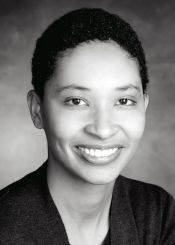
Dr. Danielle S. Allen, currently of the University of Chicago, writes about "rhetoric," usually known as manipulative or persuasive language. She redefines it as "the art of talking to strangers as equals" and "the art of generating trust."
"Properly understood, rhetoric is not a list of stylistic rules but an outline of the radical commitment to other citizens that is needed for a just democratic politics."
These quotes are from Dr. Allen's 2004 book _Talking to Strangers: Anxieties of Citizenship since Brown versus Board of Education_. In that book she draws deeply not only from Greek and Renaissance classics, but from the splendid tradition of African American social thought, translating that thought into a program by which all Americans might come together as what she calls "political friends."
We need your program, Dr. Allen. I'm listening. And thank you.
Friday, December 01, 2006
Writing for Science and Engineering
Today, scientists and engineers know they must communicate well. They are not content with yesterday's rambling discussions or Power Point templates. To help each other, scientists from top U.S. schools such as Georgia Tech, Pitt, Vermont, and Virginia Tech have collaborated on this site:
http://www.writing.eng.vt.edu/index.html
The site explains, step by step, how to handle the many facets of science writing: audiences, formats, style, slides, posters, references, etc. It includes guidelines, examples, and interactive exercises.
Some of its didactic pages are poorly formatted (as vast blocks of text). However, the links bring you to examples of every science genre, from the memo and letter to the slide presentation or the poster. Links also lead to excellent articles about the latest in designing information for scientists and engineers, including a better slide design than the defaults offered by Power Point.
Want to skip the theory and go to the skills? Proceed directly to the "exercises" page:
http://www.writing.eng.vt.edu/exercises/index.html
http://www.writing.eng.vt.edu/index.html
The site explains, step by step, how to handle the many facets of science writing: audiences, formats, style, slides, posters, references, etc. It includes guidelines, examples, and interactive exercises.
Some of its didactic pages are poorly formatted (as vast blocks of text). However, the links bring you to examples of every science genre, from the memo and letter to the slide presentation or the poster. Links also lead to excellent articles about the latest in designing information for scientists and engineers, including a better slide design than the defaults offered by Power Point.
Want to skip the theory and go to the skills? Proceed directly to the "exercises" page:
http://www.writing.eng.vt.edu/exercises/index.html
Monday, November 06, 2006
A "However" Sandwich
Too often I see sentences mispunctuated like these:
1. WRONG He arrived at the auditorium 14 minutes after the start of the meeting, however, he found a seat and listened attentively.
2. WRONG He arrived at the auditorium 14 minutes after the start of the meeting, however he found a seat and listened attentively.
Each of these sentences consists of an independent clause, then the conjunction “however,” and then another independent clause.
When “however” is sandwiched between two independent clauses, it requires a semicolon either before or after it.
Why?
In the following passage, from (House & Garden magazine, March 1991, p. 28), notice the second sentence:
3. “My work is like a diary,” Picasso told me, and I have taken him up on this. One has to tread carefully, however. Diaries are nonetheless interesting for embroidering upon the truth. --John Richardson
The second sentence ends, quite correctly, with “however.” “However” is one of the conjunctions that may either begin or end its clause.
If “however” appears between two independent clauses, the reader needs to know whether it ends the first clause or begins the second one. This information is provided by the semicolon:
4. He arrived at the auditorium 14 minutes after the start of the meeting; however, he found a seat and listened attentively.
Of course, it is also correct to split that sentence into two:
5. He arrived at the auditorium 14 minutes after the start of the meeting. However, he found a seat and listened attentively.
1. WRONG He arrived at the auditorium 14 minutes after the start of the meeting, however, he found a seat and listened attentively.
2. WRONG He arrived at the auditorium 14 minutes after the start of the meeting, however he found a seat and listened attentively.
Each of these sentences consists of an independent clause, then the conjunction “however,” and then another independent clause.
When “however” is sandwiched between two independent clauses, it requires a semicolon either before or after it.
Why?
In the following passage, from (House & Garden magazine, March 1991, p. 28), notice the second sentence:
3. “My work is like a diary,” Picasso told me, and I have taken him up on this. One has to tread carefully, however. Diaries are nonetheless interesting for embroidering upon the truth. --John Richardson
The second sentence ends, quite correctly, with “however.” “However” is one of the conjunctions that may either begin or end its clause.
If “however” appears between two independent clauses, the reader needs to know whether it ends the first clause or begins the second one. This information is provided by the semicolon:
4. He arrived at the auditorium 14 minutes after the start of the meeting; however, he found a seat and listened attentively.
Of course, it is also correct to split that sentence into two:
5. He arrived at the auditorium 14 minutes after the start of the meeting. However, he found a seat and listened attentively.
Wednesday, November 01, 2006
Numbers about Words
180,000 - Word entries in Britain's classic Oxford English Dictionary
15.7 million - Citations (showing words used in printed sources) on which is based the U.S. Merriam-Webster's Collegiate Dictionary (11th edition)
50,000 - Words in a vocabulary that would enable one to read the New York Times
350 to 500 - Words per minute that the average person (presumably U.S. English speaker) can read
100 to 175 - Words per minute the average U.S. English speaker can speak
70 - Desirable readability score as tested by Flesch Reading Ease (available in Microsoft Word)
sources: Merriam-Webster's Collegiate Dictionary; The Business of Listening by K.G. Nichols (1956); www.ukoln.ac/uk/nof/suport/help/papers/writing-web
15.7 million - Citations (showing words used in printed sources) on which is based the U.S. Merriam-Webster's Collegiate Dictionary (11th edition)
50,000 - Words in a vocabulary that would enable one to read the New York Times
350 to 500 - Words per minute that the average person (presumably U.S. English speaker) can read
100 to 175 - Words per minute the average U.S. English speaker can speak
70 - Desirable readability score as tested by Flesch Reading Ease (available in Microsoft Word)
sources: Merriam-Webster's Collegiate Dictionary; The Business of Listening by K.G. Nichols (1956); www.ukoln.ac/uk/nof/suport/help/papers/writing-web
Monday, October 09, 2006
Noodlebib Software
My sister just told me about a new version of the simple reference-making software called Noodlebib.
Here's how Noodlebib began. Mom was a librarian; son was a computer whiz. They collaborated and created a program that lets even young writers create citations and bibliographies easily. It works for APA or MLA style. There's a free version. The newest deluxe version ($8/year) even enables users to write and organize notecards--virtual or printed.
Here's their website: www.noodletools.com
Here's their blurb:
"At NoodleTools, we create innovative software that teaches students and supports teachers and librarians throughout the entire research process. Search intelligently. Assess the quality of results. Record, organize and synthesize information using online notecards. Format your bibliography in MLA or APA style."
I'm buying Noodlebib for my high school freshman. I'll let you know how it works out.
Here's how Noodlebib began. Mom was a librarian; son was a computer whiz. They collaborated and created a program that lets even young writers create citations and bibliographies easily. It works for APA or MLA style. There's a free version. The newest deluxe version ($8/year) even enables users to write and organize notecards--virtual or printed.
Here's their website: www.noodletools.com
Here's their blurb:
"At NoodleTools, we create innovative software that teaches students and supports teachers and librarians throughout the entire research process. Search intelligently. Assess the quality of results. Record, organize and synthesize information using online notecards. Format your bibliography in MLA or APA style."
I'm buying Noodlebib for my high school freshman. I'll let you know how it works out.
Tuesday, September 05, 2006
E-mail Reconsidered
Be polite. It could save your reptuation.
For centuries, English letter-writers used flowery phrases such as "My dear Mister Pecksniff" and "Your most humble and obedient servant." We smile at such ingratiating phrases, versions of which are still used in some European correspondence. But did our ancestors know something we don't?
Today's e-mail evolved after the 1970s, when scientists (mostly male) messaged each other with regard to government and other research. Because males avoided typing classes, most of them approached a keyboard with two fingers. In addition, they had little need to ingratiate themselves with their correspondent. Thus arose both smilies and the cryptic style that the rest of us imitated.
But all written messages arrive stripped of tone, gesture, timing, and interactivity. The message may have been written in haste and constitute the utilitarian minimum of denotation. I propose (I have no proof) that readers see an e-mail as a sort of verbal inkblot. On this minimal stimulus, the reader imposes an often unconscious "spin." Thus the reader may read offense where none was intended. (The famous case of the all-capital "screamed" message is only one instance.)
Equally problematic in business, the writer may use the minimal stimulus of email to convey intended insult and then deny it.
In short, e-mail is a minefield. You may not be Bob's most obedient servant; but an extra "thank you" or "what do you think?" can protect you from unintentional harm.
For centuries, English letter-writers used flowery phrases such as "My dear Mister Pecksniff" and "Your most humble and obedient servant." We smile at such ingratiating phrases, versions of which are still used in some European correspondence. But did our ancestors know something we don't?
Today's e-mail evolved after the 1970s, when scientists (mostly male) messaged each other with regard to government and other research. Because males avoided typing classes, most of them approached a keyboard with two fingers. In addition, they had little need to ingratiate themselves with their correspondent. Thus arose both smilies and the cryptic style that the rest of us imitated.
But all written messages arrive stripped of tone, gesture, timing, and interactivity. The message may have been written in haste and constitute the utilitarian minimum of denotation. I propose (I have no proof) that readers see an e-mail as a sort of verbal inkblot. On this minimal stimulus, the reader imposes an often unconscious "spin." Thus the reader may read offense where none was intended. (The famous case of the all-capital "screamed" message is only one instance.)
Equally problematic in business, the writer may use the minimal stimulus of email to convey intended insult and then deny it.
In short, e-mail is a minefield. You may not be Bob's most obedient servant; but an extra "thank you" or "what do you think?" can protect you from unintentional harm.
Subscribe to:
Posts (Atom)